NFS Carbon Recomp
Static recompilation of Need for Speed: Carbon to native C++ using the ReXGlue SDK.
Static recomp Not stated releasedAll 5 Need for Speed: Carbon projects compared →
NFS Carbon 360 Recomp · NFS Carbon for Apple Silicon · ReCarbon
About NFS Carbon Recomp
NFS Carbon Recomp is a static recompilation of the Xbox 360 version of Need for Speed: Carbon. The game's PowerPC code is converted ahead of time into native C++ with the ReXGlue SDK, and the project has written its own Vulkan renderer for the game in place of the SDK's Xenos graphics backend. Its published builds are Android packages, and much of the recent work is aimed at running the game on phones, though the changelog also records PC testing on an NVIDIA RTX 5070.
There is no README, so details for players come from the release notes and changelog. Each release is a debug-signed APK for arm64 and x86_64 Android devices, and you must supply your own game data; the launcher sends you to a game data setup page if none is found. The sources do not say which region or disc version is expected.
The latest release, v0.3.12 from October 2026, brought a redesigned launcher with one-tap settings, an on-screen touch controls editor and several renderer optimisations that the author notes were not yet measured. Earlier 0.3.x builds added phone widescreen, faster texture decoding, a threaded GPU command path and turned off an unused car reflection pass. On PC the changelog reports the boot movies, menus, prologue drive and pause menu rendering correctly at 60 fps, while the Android build was still awaiting profiling on real devices. Open issues report crashes on Mali GPUs and some Snapdragon phones and lagging headlights on Exynos chips. The repository has had no new commits since that release.
The site lists three other Carbon projects: NFS Carbon for Apple Silicon, which recompiles the 2006 PC release for Macs; ReCarbon, an Apple Silicon build from the Xbox 360 disc; and SpeedBreaker: Carbon, which targets SteamOS, Linux and Mac with Windows and iOS builds.
Facts
- Original
- Need for Speed: Carbon (2006)
- Platform
- Xbox 360
- Method
- Static recomp
- Provenance
- Not stated what this means
- Status
- released
- Licence
- none
- Team
- Sampreeth004
- Started
- 2026-10
- Runs on
- Windows
- Needs the original
- Yes: you supply your own legally obtained copy
How to get it legally
This project ships code only. Build or download it from the official repository, then supply data from a copy of Need for Speed: Carbon you own. Recomp never links to ROMs, discs or game data.
This project was recompiled by Sampreeth004. Facts last checked 2026-10-14. Suggest a correction
Lineage
Sources
Related
All games →NFS Carbon 360 Recomp
Need for Speed: Carbon (Xbox 360)
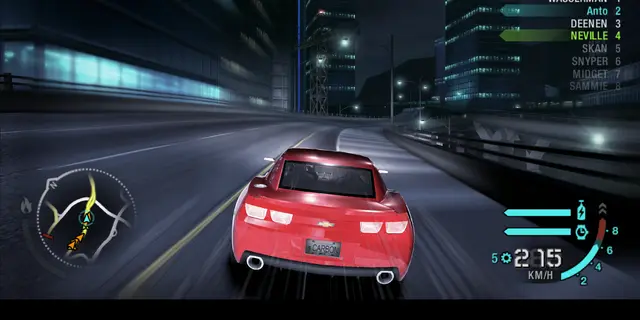
Experimental static recompilation of Need for Speed: Carbon for Xbox 360 using ReXGlue, currently a Windows x64 prototype.
NFS Carbon for Apple Silicon
Need for Speed: Carbon
Native macOS build of the 2006 PC game for Apple Silicon Macs, made by statically recompiling the game's x86 code. Players bring their own copy.
ReCarbon
Need for Speed: Carbon
Apple Silicon recompilation of the Xbox 360 Need for Speed: Carbon (not the PC version), built on a patched XenonRecomp; the recompiled code is generated on the player's Mac from their own disc image. Releases are alpha pre-releases and the game is playable in parts.
 +5 ★ this week
SpeedBreaker: Carbon
Need for Speed: Carbon
Carbon counterpart to the SpeedBreaker Most Wanted port: a static recompilation of the Xbox 360 game whose installer verifies and unpacks the user's USA Collector's Edition disc image. Main builds target SteamOS (x86-64 and arm64), Linux and Mac, with a Windows beta and an experimental iOS IPA.
007: The World Is Not Enough static recompilation
007: The World Is Not Enough
Hobby static recompilation of the N64 game 007: The World Is Not Enough for PC and Steam Deck with widescreen and modern controls.
AC6Recomp
Ace Combat 6: Fires of Liberation
Work-in-progress port of Ace Combat 6 built on the ReXGlue SDK, recompiling the PowerPC code to x86-64 while graphics still go through a Xenia-derived backend.